

Mies van der Rohe and Lilly Reich: the two behind the classics
He loved paintings by Schwitters, martinis and cigars, and he gave himself a name that sounded like nobility. Yet behind his most famous furniture stood someone else: a woman with a head for figures and an eye for colour, who stayed behind in Berlin when he left for Chicago with a single suitcase.
When a colleague once asked Mies van der Rohe what he loved most, he named three things: his paintings by Kurt Schwitters, his martinis and his cigars. That already tells you a good deal about the man whose name today stands on the Barcelona Chair, the Brno Chair and the MR cantilever chair, but it is only half the story. Behind much of this furniture there was a second person, and her name was Lilly Reich.
Aachen & Berlin · 1886–1921
A name he gave himself
He was born Ludwig Mies in Aachen in 1886, the son of a stonemason, and he never studied architecture: he learned his trade on building sites and at the drawing board. In the early 1920s he added his mother’s maiden name, Rohe, slipped a ‘van der’ in front of it and from then on called himself Mies van der Rohe. It sounded like old nobility and was pure invention. When a court asked him decades later why he had done it, his answer could hardly have been shorter: because he liked it.

Dessau & Chicago · from 1930
The silent Mies, half a myth
In America he was known as the great silent one, but those who worked with him knew better. In German he was lively and never at a loss for words; only in English did he hold back, let the others talk and, at the end, sum up in a single sentence what really mattered. One colleague, incidentally, thought this was pure tactics.
His students did not get to hear much either. He would study their designs for a long time in silence, and then usually say no more than: ‘Try it again.’ Talent, he felt, was merely the cream in the coffee; what counted was the work. And yet he could be drily funny and now and then raise his voice, and he only really bore a grudge when someone had let him down on the job.
Mies van der Rohe to his students‘Talent is only cream in your coffee.’
Berlin · 1925
Lilly Reich: the woman who kept him in order
By the time Lilly Reich and Mies met in the mid-1920s, she was already a well-known designer with her own studio, and she was the very first woman on the board of the Deutscher Werkbund. Her first letters to him still use the formal ‘Sie’, but only a few months later he is choosing handbags for her and she is giving him a yellow house jacket. Their collaboration quickly turned into a love affair that lasted a good ten years.
In many ways she was his opposite: disciplined and organised, with a head for figures that Mies entirely lacked, so much so that a friend of the couple thought he would have been lost without her. Above all, though, she loved colour. For a café at a Berlin fashion exhibition she chose velvet in black, red and orange and silk in gold, silver and lemon yellow, at a time when modernism liked to appear in nothing but white.
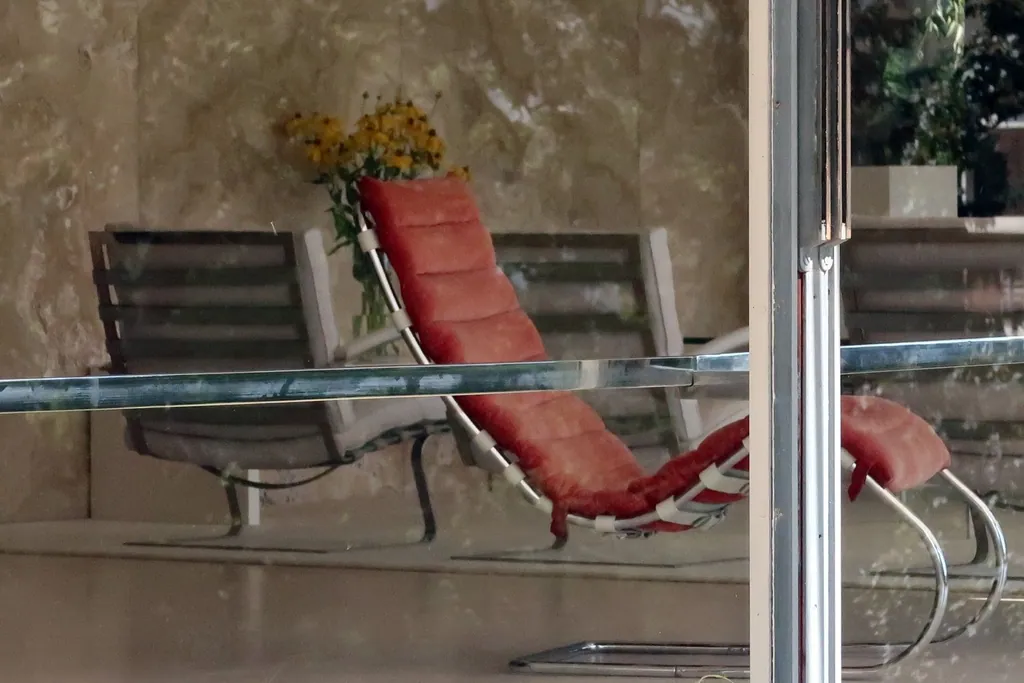
In 1928 the two of them were jointly commissioned to design the German Pavilion in Barcelona, and one official complained at the time that she was pushing Mies into artistic experiments. Later, at the Villa Tugendhat in Brno, they spent hours trying out colours together. How much of her is in the furniture itself can no longer be said with certainty, but almost everyone who studies the pair agrees that her share was long underestimated.
Berlin · 1933–1938
A farewell with no return
Under the Nazis, there was less and less room for modernism. The Bauhaus, the most famous design school of its day, which Mies had led at the end, dissolved itself in 1933. Mies still hoped for state commissions and in 1934 even signed an appeal in support of Hitler, something many never forgave him. He did not get the commissions all the same.
Instead, a letter arrived from Chicago. Two architects there were looking for a new head for their school of architecture, after a colleague had shown them photographs of the Barcelona Pavilion in a library. Mies took his time, travelled to America for the first time in 1937 to work on a country house in Wyoming, and finally said yes. In August 1938, after a visit from the Gestapo, he packed a suitcase and left, and that autumn he took over the school in Chicago.
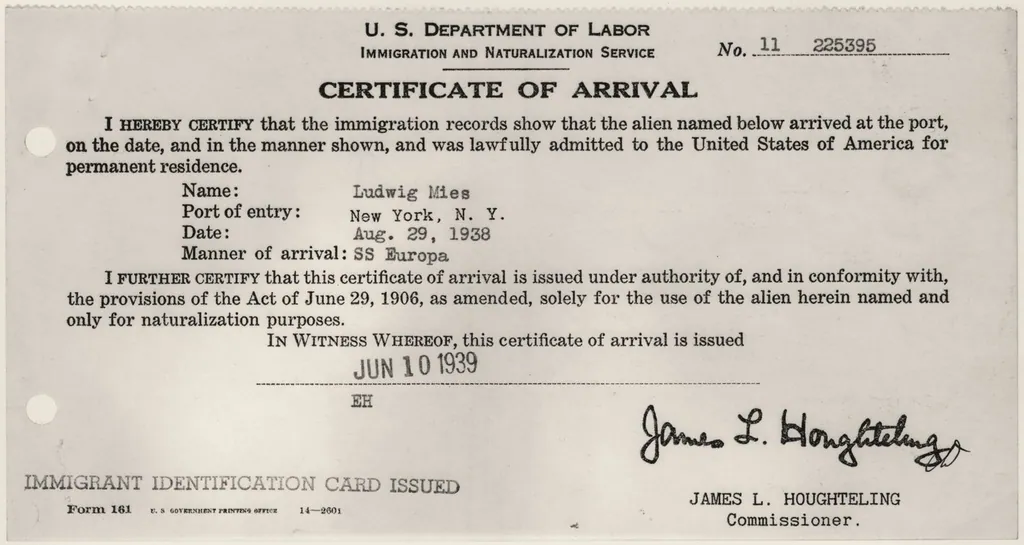
Lilly Reich stayed in Berlin and kept his office going. Only once, in 1939, did she visit him in America, and his friends later believed he hardly asked her to stay because he wanted to be free of this woman who was so sure of herself. There was no big quarrel, rather a quiet drifting apart. In the last of her letters to survive, she writes that she often thinks of those last days in Chicago and that her feeling had probably been right. The two never saw each other again. She packed his Berlin papers into crates, and the ones labelled ‘Lilly Reich’ Mies is said never to have opened. She died in Berlin in 1947.

Chicago & New York · 1938–1965
Chicago: white walls, Klee and no car
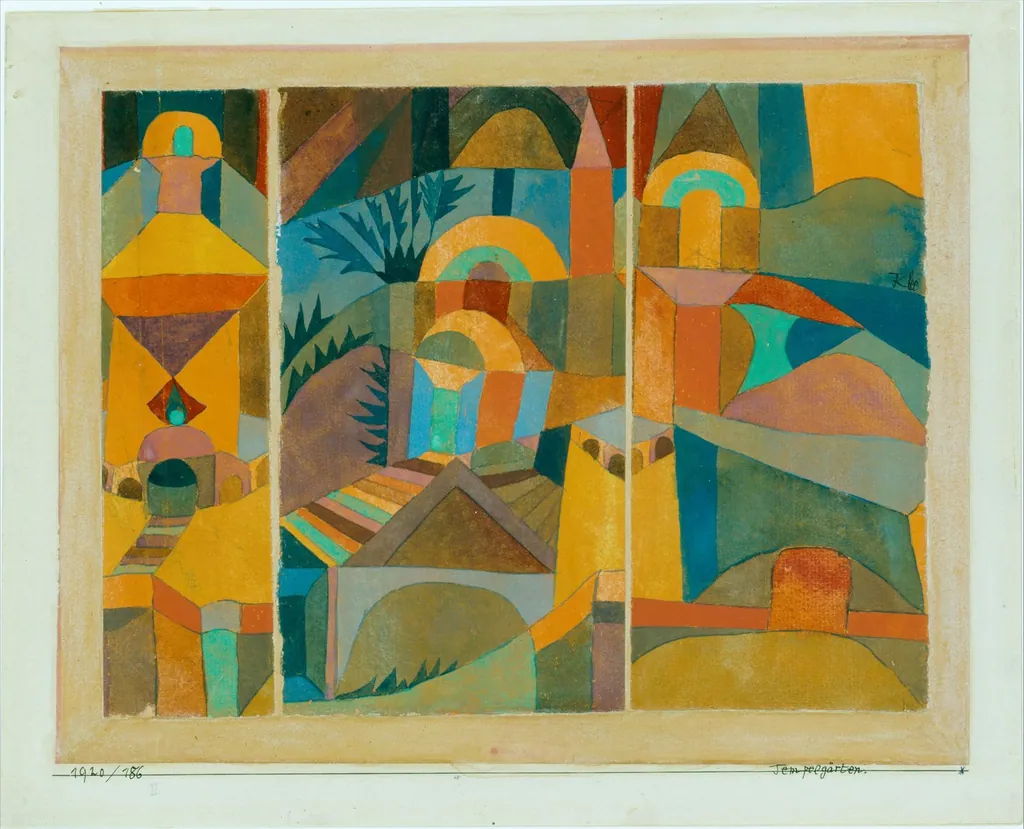
For his first three years in Chicago Mies lived in a single hotel room, before moving into a flat with white-painted walls on which more than twenty paintings by Paul Klee soon hung. Otherwise it looked so empty that a student on his first visit asked when he was moving in. For a long time Mies had no car; he took a taxi everywhere.
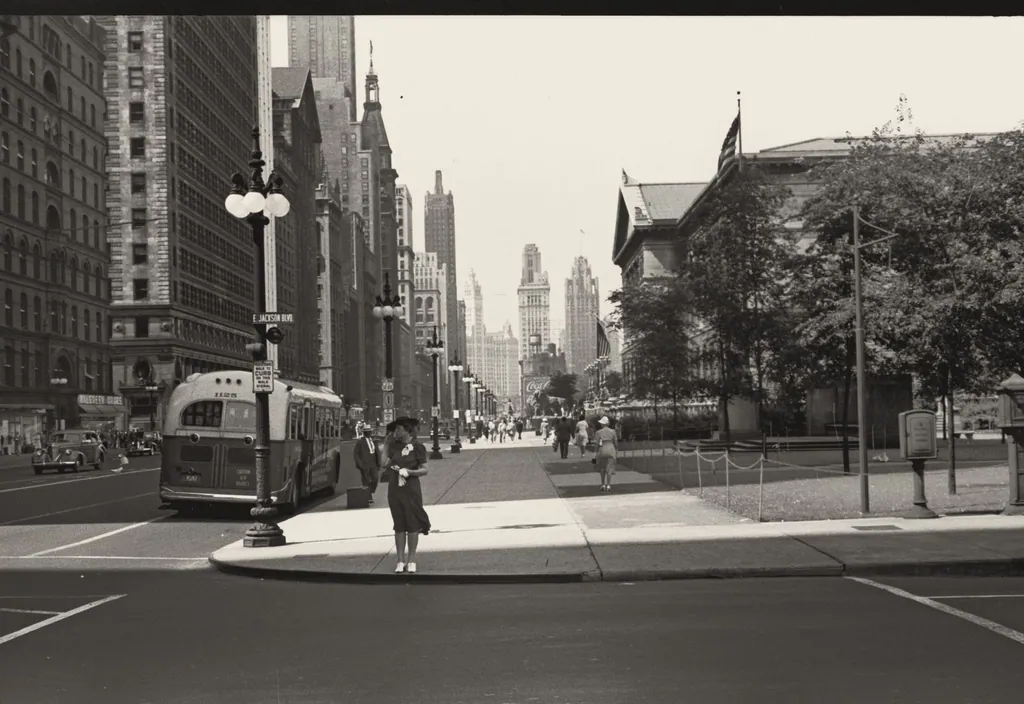
In those years a young architecture student often passed his hotel on her way home and dropped in for a coffee: Florence Schust, later Florence Knoll. Orphaned at twelve, she had spent part of her youth with the family of the Finnish architect Eliel Saarinen, whose son Eero she called her big brother. From Mies, she said later, she learned to strip an idea down to the bone.
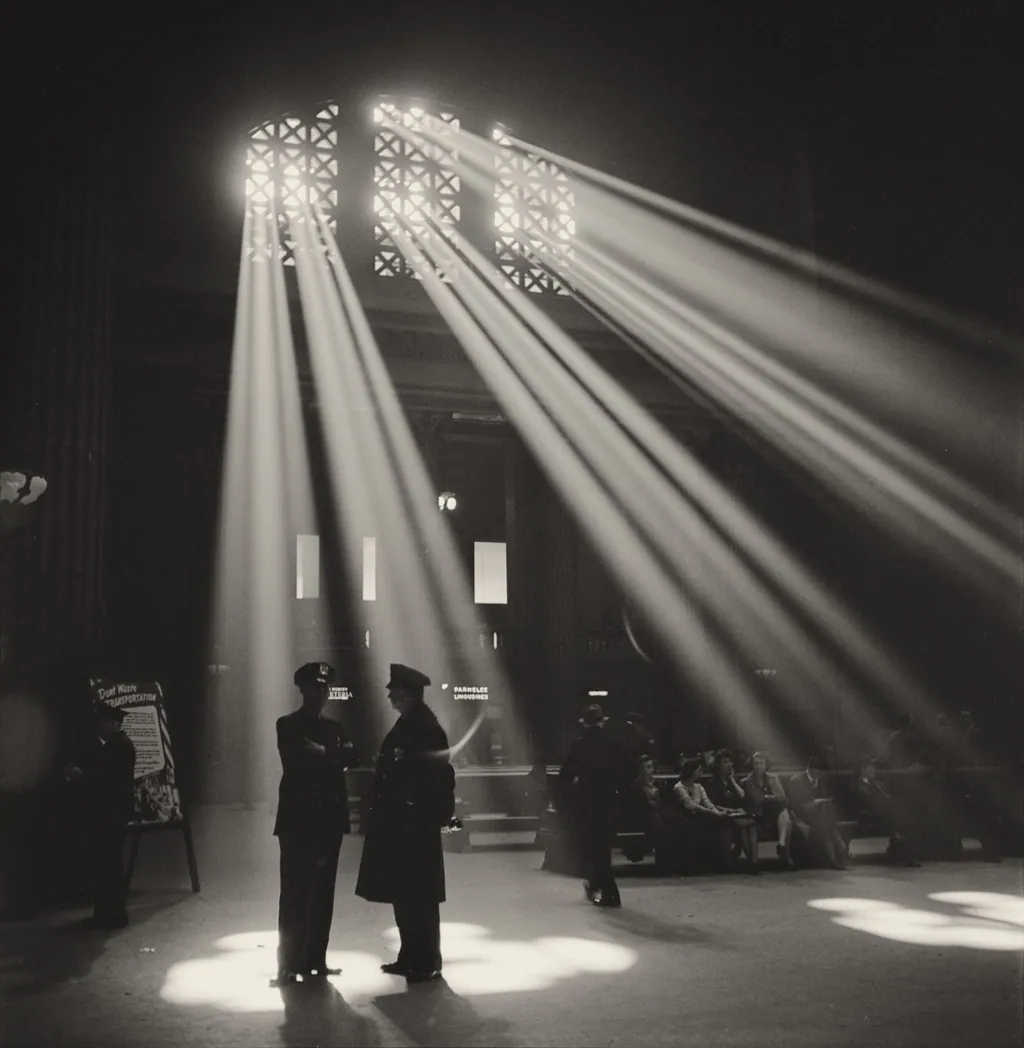
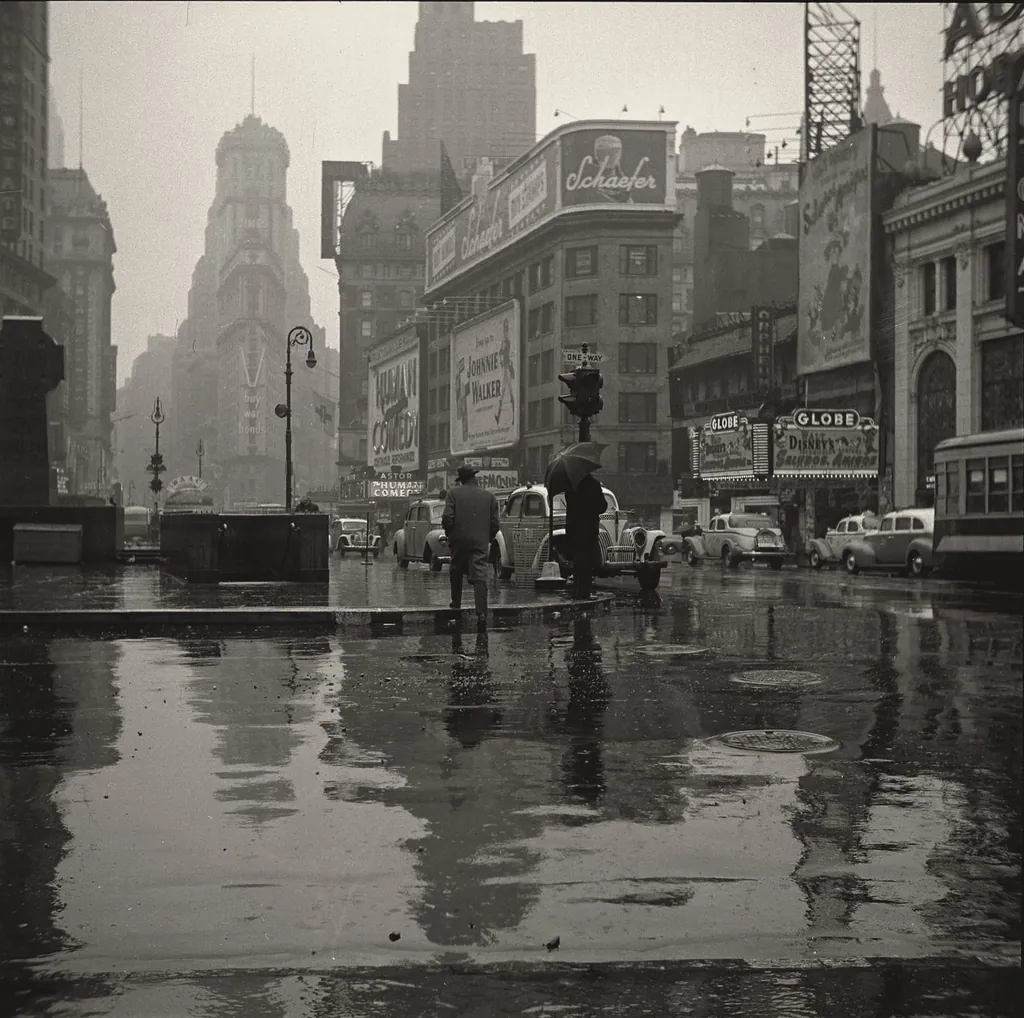
In New York she met Hans Knoll, the son of a Stuttgart furniture family, who was just building up a small furniture company there, and in 1946 the two married. Within the company Florence set up a planning department, the first at any American furniture maker, furnished offices for large corporations and designed a good part of the range herself. And she brought her old teacher on board: Knoll has produced his furniture in series since 1948, and in 1965 Mies finally sold the company all the rights. The story of the Barcelona Chair
To finish
Three words that stay
Mies van der Rohe‘Less is more.’
No phrase is linked with him more often, and he really did say it. As he told it himself, he first heard it as a young man from Peter Behrens, in whose Berlin office he was working at the time.
Furniture by Mies van der Rohe in our shop


Since the mid-1990s, the Barcelona Chair has had the Knoll logo and Mies’s signature stamped into the rear right leg.
In Germany the Barcelona Chair, Stool, Daybed and Table are protected as works of art, as the Federal Court of Justice (BGH) has also confirmed.
We are an authorised Knoll dealer and are happy to help with leather, colour and finish. Browse the Knoll collection
Less is more.
But two are more than one.
Sources
Franz Schulze and Edward Windhorst, Mies van der Rohe. A Critical Biography (Chicago 2012); Dietrich Neumann, An Accidental Masterpiece (Birkhäuser 2020); Daniela Hammer-Tugendhat, Ivo Hammer and Wolf Tegethoff, Haus Tugendhat (Birkhäuser 2020); Brian Lutz, Knoll: A Modernist Universe (Rizzoli 2010); U.S. National Archives, naturalisation files of Ludwig Mies (1938/39); BGH, judgment of 5 November 2015, I ZR 91/11.
Pictures
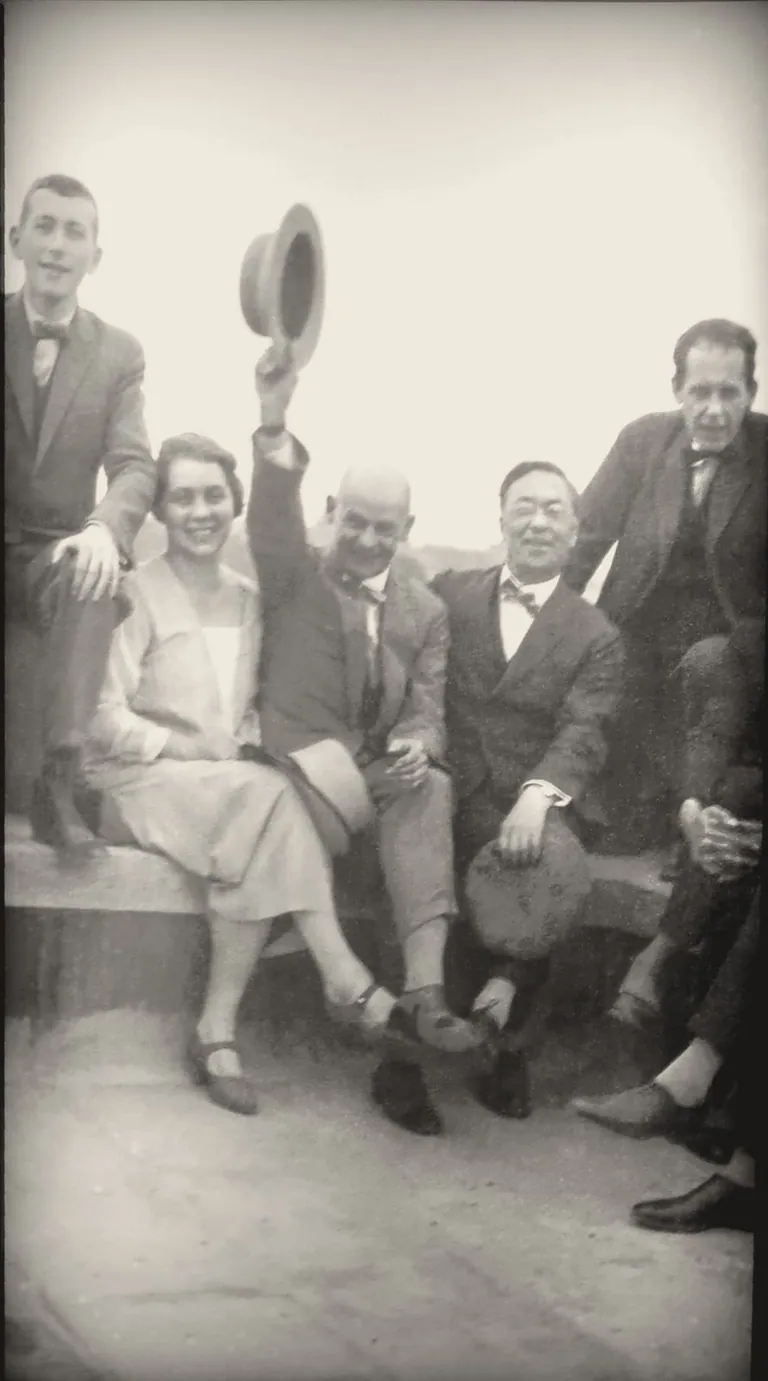
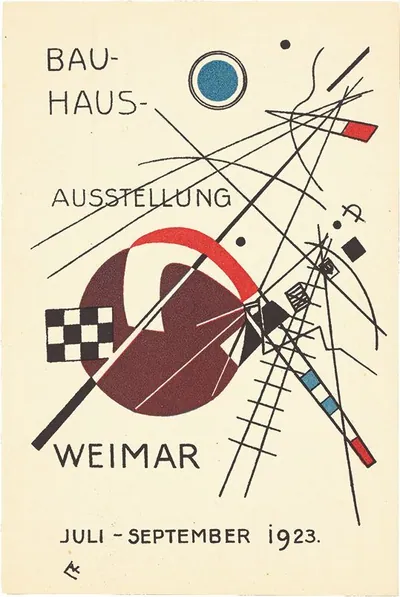
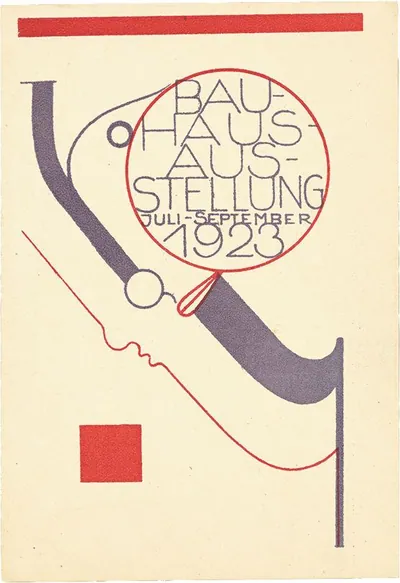
Collage at the top: Hugo Erfurth (1934), Lesser Ury (1925), Kurt Schwitters (1922), all public domain; Pexels: Siva Madurai, Dan Cristian Pădureț, Lisa Reichenstein. Documents: U.S. National Archives (public domain). Bauhaus: photo 1926, anonymous; postcards by Wassily Kandinsky and Oskar Schlemmer, 1923 (public domain). Paul Klee, Temple Gardens, 1920: The Metropolitan Museum of Art (public domain). Chicago and New York: John Vachon and Jack Delano, Library of Congress (public domain). Villa Tugendhat: Fred Romero (CC BY 2.0), Thomas Ledl (CC BY 4.0), both edited. Map: Natural Earth. Colour swatches and maps: Villa Schmidt. Product photos: Knoll.