
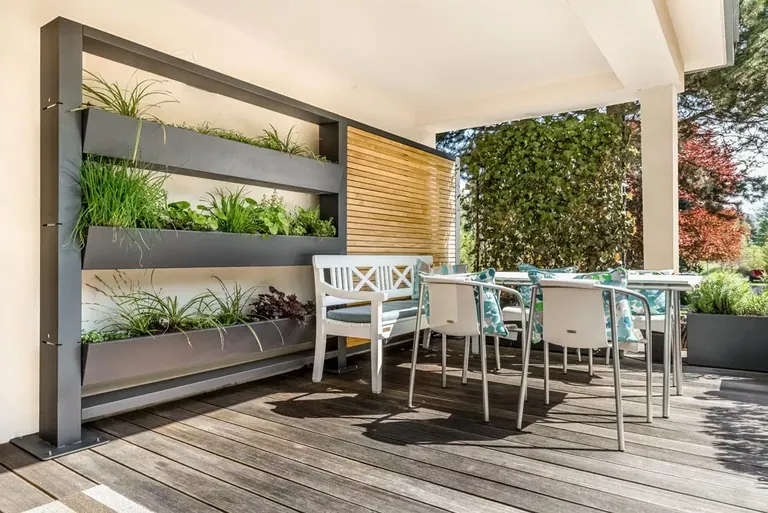
Make your garden dreams come true with vertical gardens

Vertical gardens are a creative, space-saving way to bring greenery into your garden. These green walls offer not only aesthetic enrichment but also numerous practical benefits. In this article we look at the definition of vertical gardens, explain their benefits for your garden and show you how to create a vertical garden of your own.
What are vertical gardens?
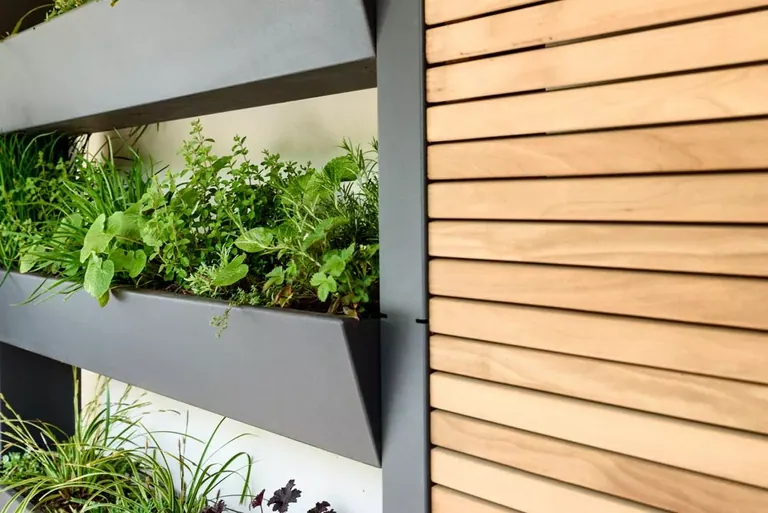
A vertical garden, also known as a green wall or living wall, is a garden planted vertically on a wall or other vertical support. Plants are set into special containers, pockets or modules mounted vertically on the wall. These planting systems can be used both indoors and outdoors and offer a wide range of planting possibilities.
Benefits of vertical gardens
Space saving: Vertical gardens are ideal for small gardens, balconies or terraces, as they make the most of limited space while providing lush greenery.
Aesthetics: A green wall can create an impressive visual effect and turn your garden or outdoor areas into a green oasis. It lends any space a natural, calming atmosphere.
Air purification: Plants in vertical gardens help purify the air by filtering pollutants and producing oxygen. This can be particularly beneficial in urban environments with air pollution.
Sound insulation: Vertical gardens can also help reduce noise levels by acting as natural sound barriers and absorbing sound.
Air conditioning: Greening walls can even out temperature fluctuations and improve the microclimate, resulting in a more pleasant environment.
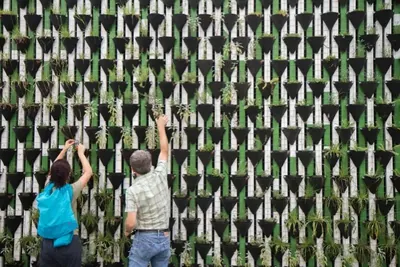
Photo by Daniel Funes Fuentes on Unsplash
CREATE YOUR VERTICAL GARDEN WITH THESE PRODUCTS:


How do you create a vertical garden?
Choosing the location: Choose a location for your vertical garden that offers sufficient sunlight and access to water. Make sure the wall or support is stable enough to bear the weight of the plants.
Choosing the plants: Decide which plants you would like to grow in your vertical garden. Consider the location (sunny or shady) as well as the growing conditions and space requirements of each plant species.
Choosing a planting system: There are various types of planting systems for vertical gardens, including pockets, trellises, shelves and modular systems. Choose the system that best suits your needs and your budget.
Installation: Fasten the chosen planting system securely to the wall or support and make sure it is correctly aligned. Ensure there is enough space between the planters to allow adequate air circulation.
Planting: Plant the individual containers or modules with selected plants. Make sure you use suitable soil and water and fertilise the plants regularly.
Care: Check your vertical garden regularly for pests, disease or dryness. Cut the plants back as needed and remove dead leaves or flowers.
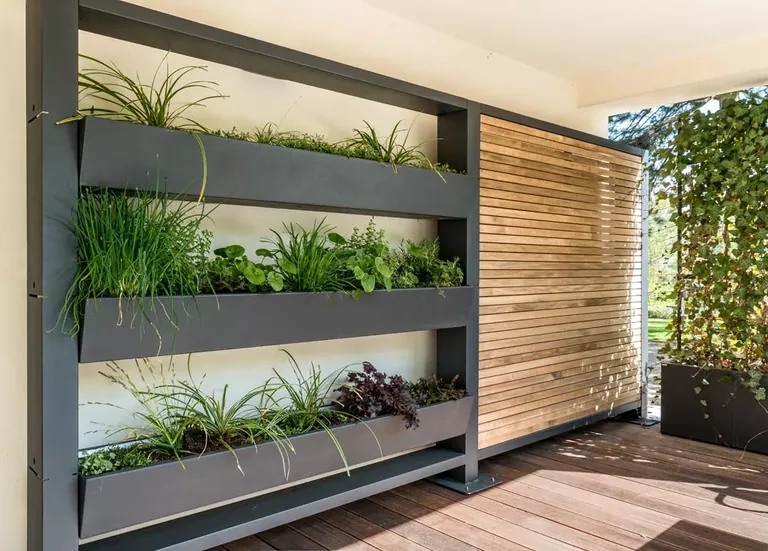
With these steps you can create your own vertical garden and enjoy the benefits of a green wall in your own garden or outdoor space. Whether you want to create a small herb oasis or an impressive green wall, vertical gardens offer a versatile, attractive way to bring nature into your home.
You might also be interested in:
- 4 insider tips for the perfect garden furniture purchase
- Shading solutions for your garden with parasols and accessories
- Accessories for planting up your outdoor space