

The chair nobody could build
Warren Platner wanted an armchair as playful as a French king’s, but made of bare steel. Knoll spent years working out how to make such a thing at all, and paid him a penalty every month while it did. The wait was worth it.
Michigan · around 1960
The man for the interiors
Around 1960, Bloomfield Hills, a suburb of Detroit, is home to one of the most sought-after architecture practices in America. Here Eero Saarinen designs airports, corporate headquarters and university buildings, with sketches pinned to the walls and models standing on the tables.
One of his people is Warren Platner, an architect from Baltimore who has already worked for the industrial designer Raymond Loewy and for I. M. Pei. Loewy, he said later, taught him that it is ‘worthwhile to pay attention to a very simple object’.
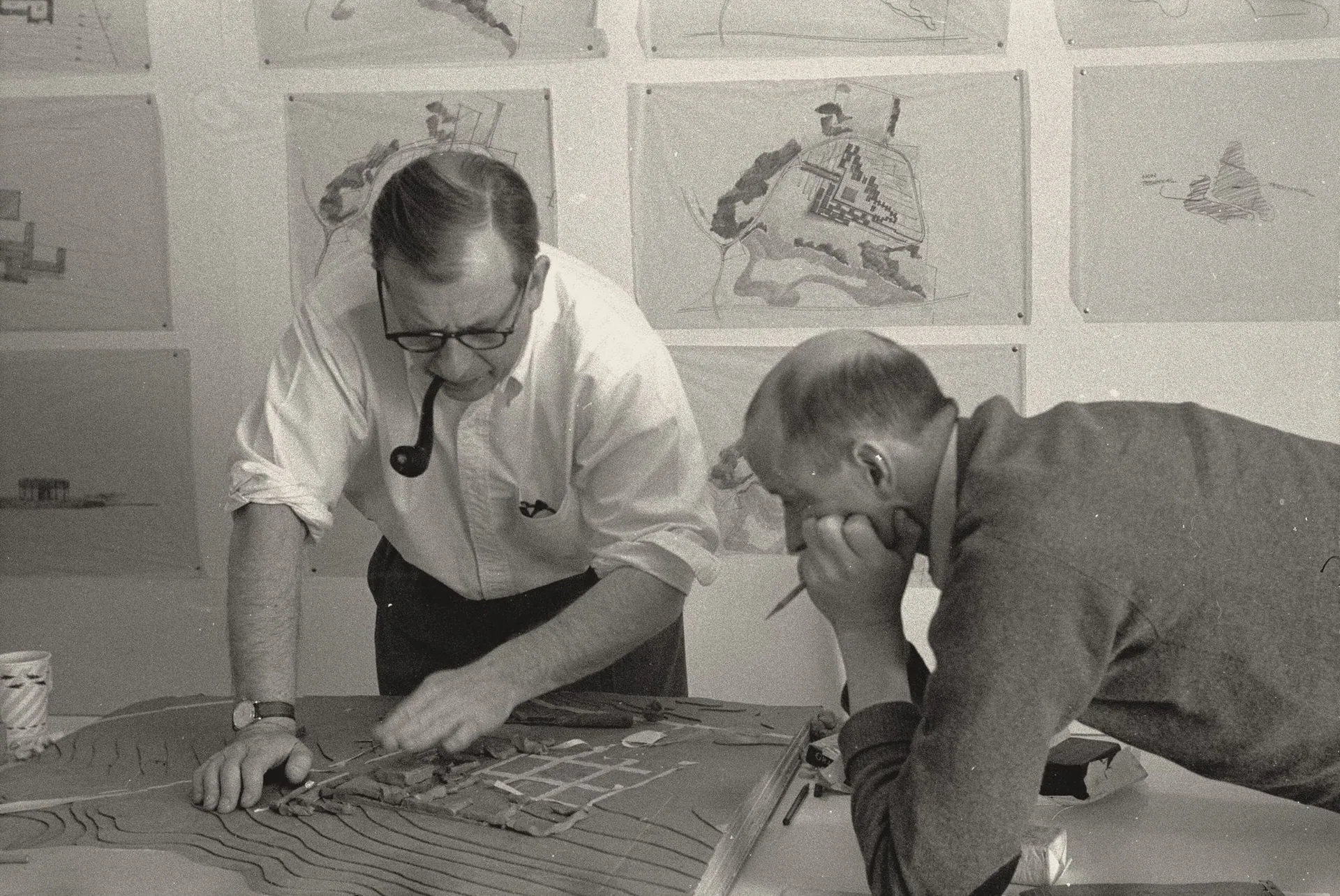
At Saarinen’s, Platner often takes care of what happens inside, and to him the interiors are anything but a sideline. Ignoring them, he said, means missing something, ‘because after all, what’s the building for?’
That is also how he comes to know Knoll, because he chooses the furniture for the projects and works with Saarinen on his collection for Knoll, the furniture on a single pedestal. Hans Knoll, in his words, was ‘a super salesman, very nice guy’. When Saarinen dies in 1961, the office moves to Connecticut, where Platner heads interior design.
Connecticut · 1962
A king’s armchair in steel
Modernism has banished ornament: it wants smooth surfaces, clean lines and nothing superfluous. Platner sees things differently and thinks of the furniture in the palaces of the French kings around 1750, the style known as rococo, with its sweeping curves and plenty of gold. There is room, he says, for a decorative, gentle, graceful kind of design, as long as it has a rational base instead of decoration applied on top.

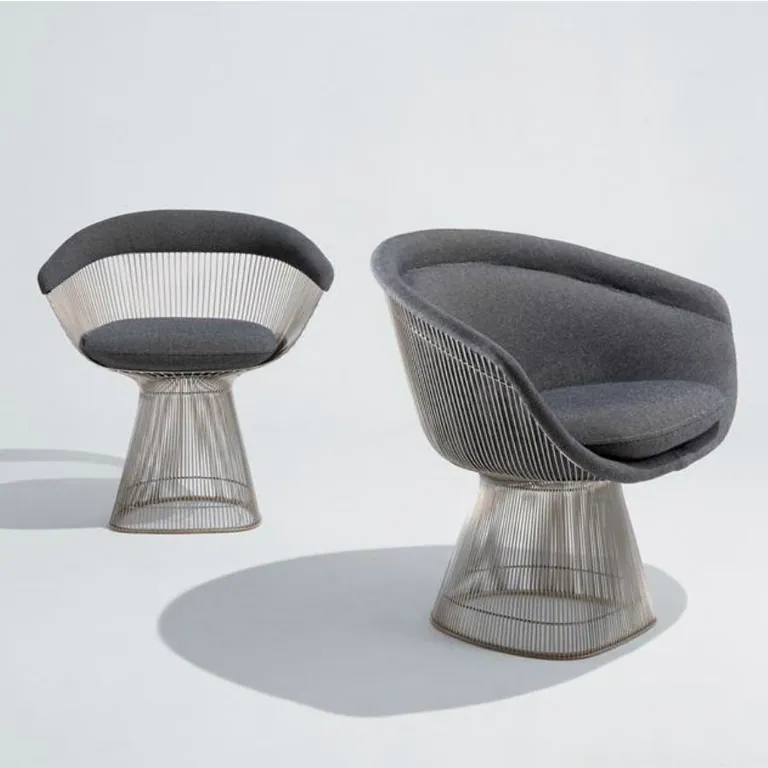
And he wonders why support and seat should be separate at all: ‘Just make it all one thing. Starts at the floor and comes up and envelops me, supports me.’ Where Saarinen had reduced the chair to a single leg, Platner sets it on a ring of bent steel rods, welded to hoops, that carry and adorn it at the same time.
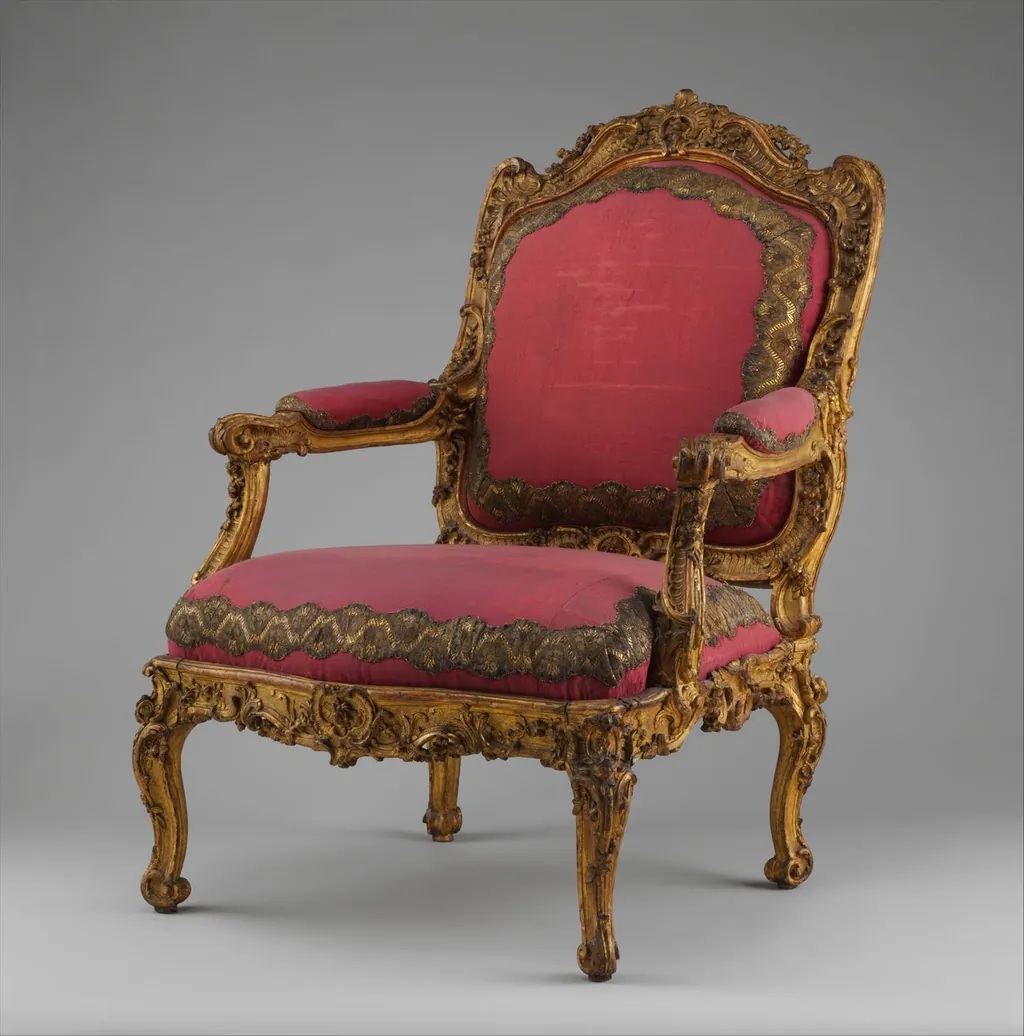
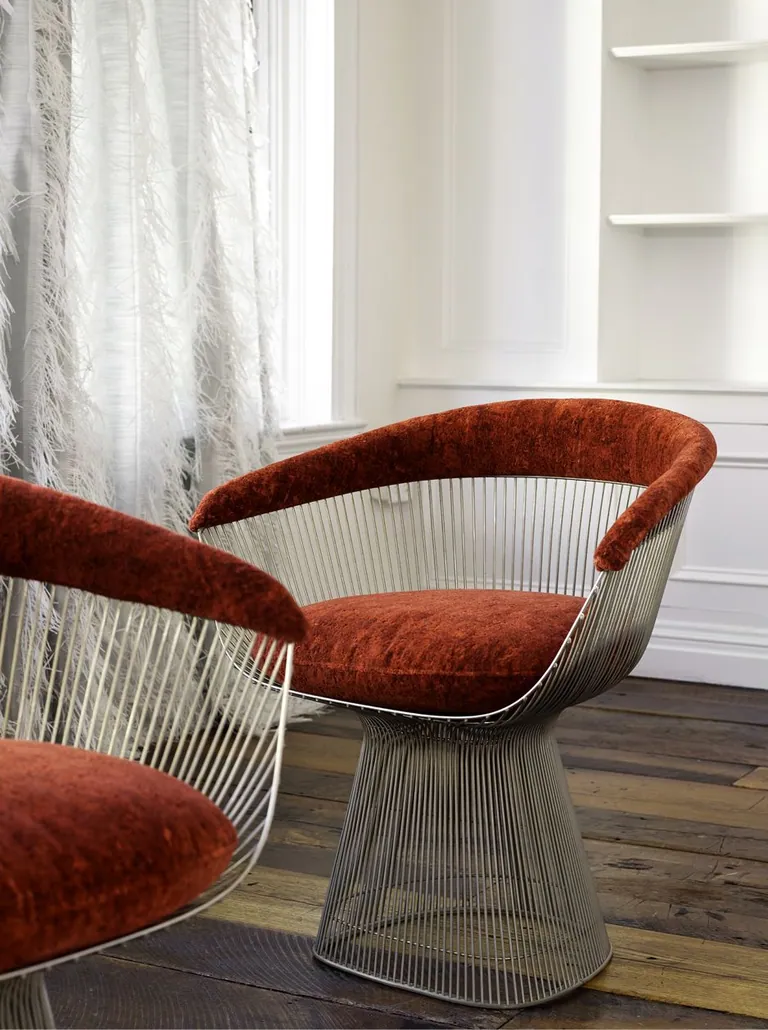
At first glance the two have little in common, and Platner did not borrow the carving at all. What matters to him is the idea behind it: in the royal court’s armchair, frame and decoration flow into one another, the back sweeps in an arc around whoever is sitting in it, and gold and silk turn the piece of furniture into a little jewel. That is exactly what he attempts with steel. His bent rods are frame and ornament at once, the shell wraps around you as you sit, and later the base even comes plated in gold.
In 1962 he takes his designs to Knoll because, as he puts it, the company ‘has had more distinguished designers than anybody else and has featured them’. Not everyone there is enthusiastic, though: the design team is divided, and its sharpest critics object to precisely the decorative side.
Warren Platner‘The basic premise [of a chair] … is ridiculous from a visual standpoint. I think that’s why chairs are so difficult to design. Buildings are easy.’
East Greenville · 1965
A penalty every month
Then the waiting begins. At the Knoll factory in East Greenville, Pennsylvania, the development department tries to make the designs buildable, which is anything but easy, because there are a great many rods and every one of them has to sit exactly right. Florence Knoll, who spends these years commuting between New York and Miami, keeps an eye on the project from afar.
In 1965 Robert Cadwallader arrives as the new head of marketing, and he later described what he found: everybody came to work more or less on time and left on time, but nobody finished anything. He brings in Don Albinson, a tinkerer who had worked for Charles Eames, to run development.
Albinson comes across four projects that have been in the works for years, and one of them is Platner’s collection. Nobody, he remembered, had any idea how to make even one of the Platner pieces, and they had been at it so long that Knoll was paying Platner a penalty every month because production still had not started.

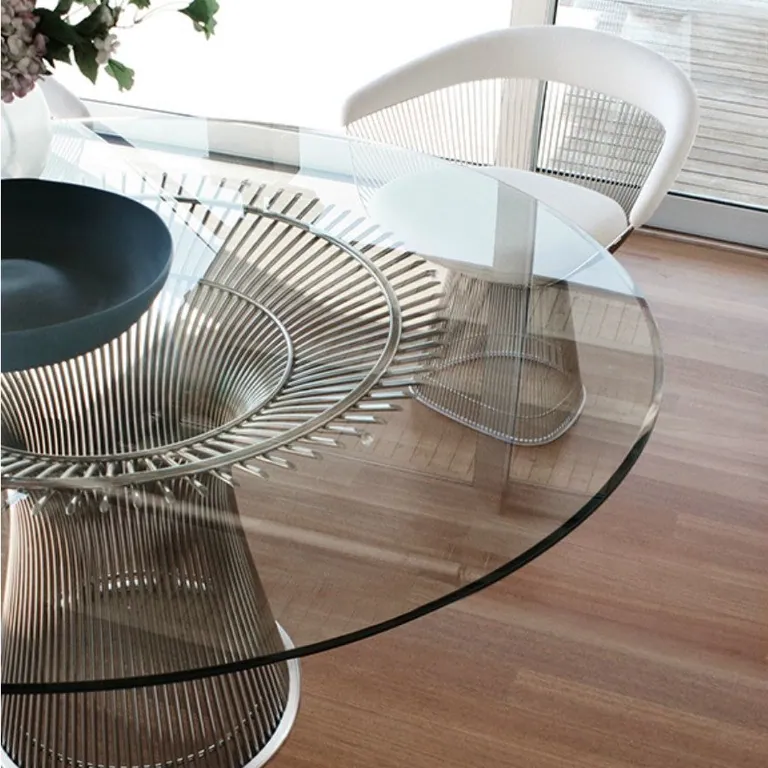
Platner himself helps work out the method and the tooling, and in 1966 the moment finally comes: armchairs, lounge chairs, stools and tables go on sale, with over a thousand welds and more than a hundred rods in every single lounge chair, as Knoll counts today. The New York Times later compares the base to a shiny sheaf of wheat, and the collection becomes a success with critics and customers alike that lasts to this day: Knoll has been making it without a break ever since.
New York · 1976
A Versailles above the clouds
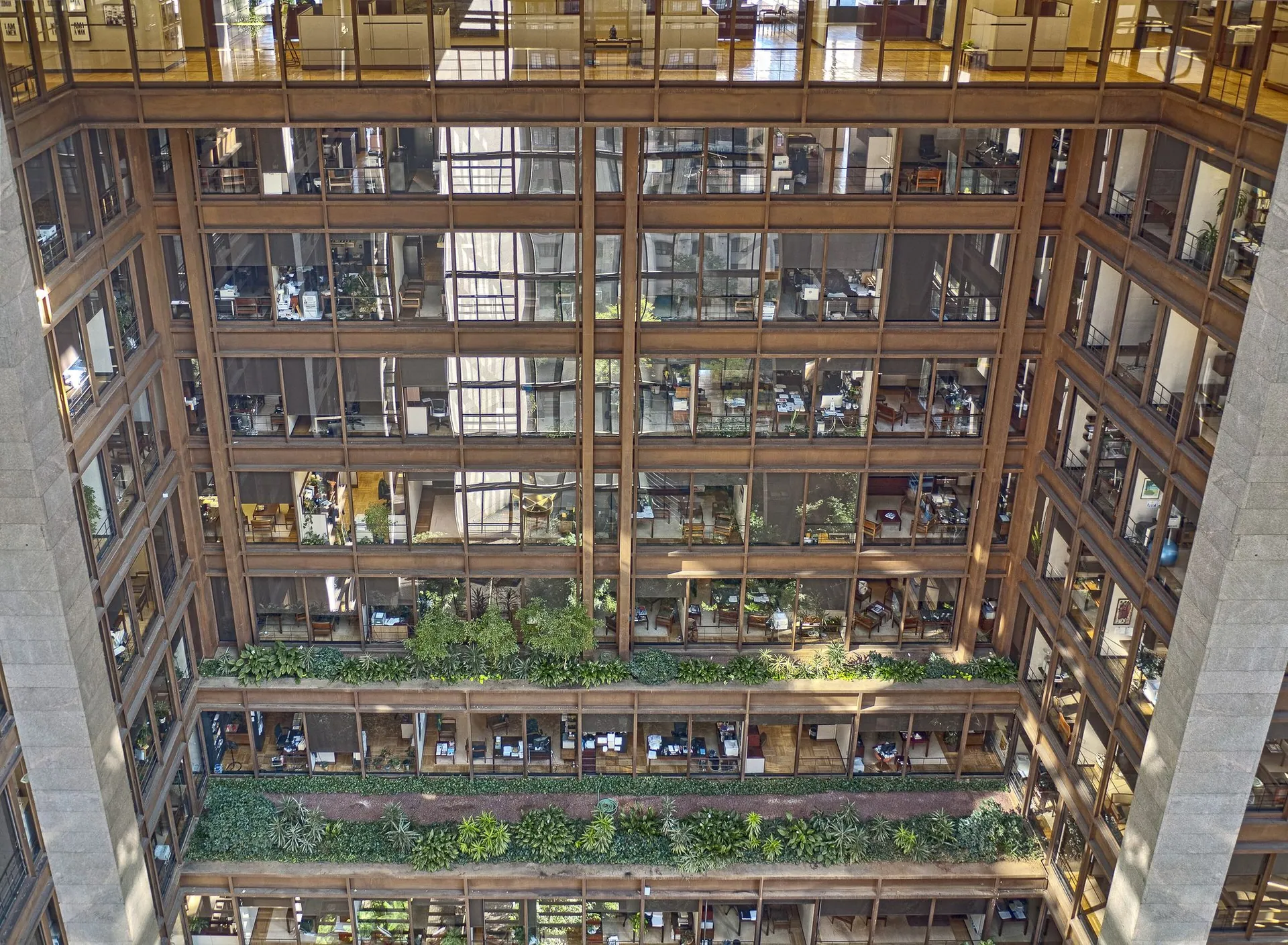
In the mid-sixties Platner goes independent with a studio of his own in New Haven, and in Manhattan he fits out the offices of the Ford Foundation, with desks that have the telephone and trays built right in.
He is a perfectionist, above all about decorative details, and anyone who wants to show him something has to make the trip to New Haven, because he won’t come to New York for it and break off his work. For a restaurant in Kansas City, built for the family behind Hallmark greeting cards, he wants a room ‘like a huge lace Valentine’.
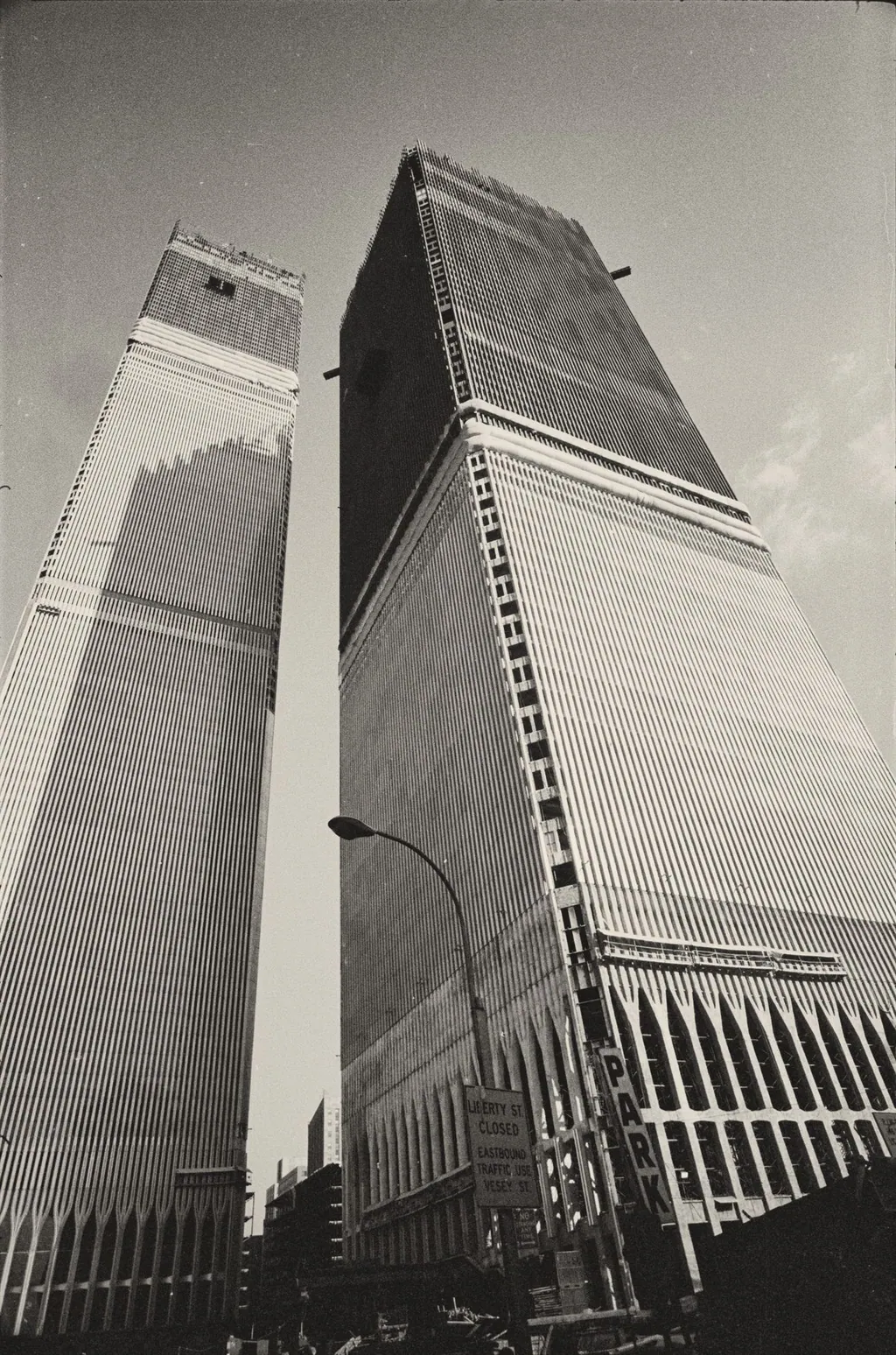
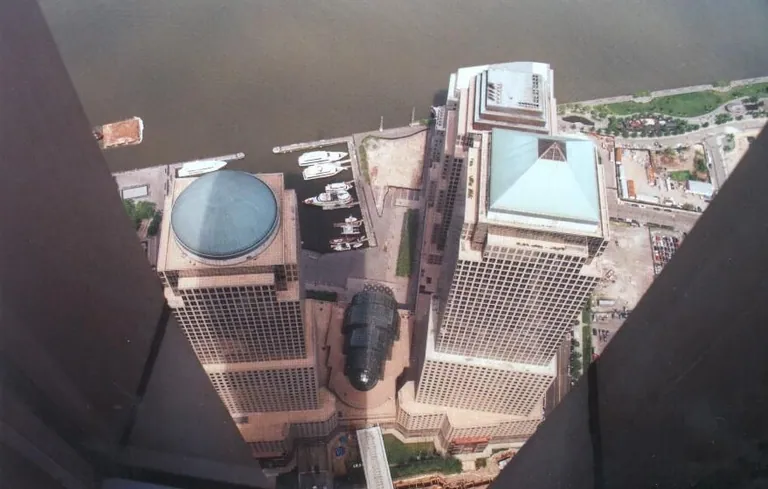
Then, in 1976, his most famous project opens: the Windows on the World restaurant at the very top of the World Trade Center’s North Tower. The main dining room steps down in terraces so that every table has the view, almost like the inside of an ocean liner, with fabric on the walls and brass railings that seem to go on for ever. In The New York Times Paul Goldberger calls it ‘sensuous modernism’, other critics speak of a modernist Versailles, and the reception area is furnished with Platner’s own pieces, an Easy Chair and a side table. Since 11 September 2001 the restaurant has been gone.
Italy · 2015
Gold at last
There is one thing, though, that Platner never got. He had really wanted his furniture gilded, but at the time gold could not be applied to a base like this in series production, and so it became nickel.
Years later, Knoll’s design director Benjamin Pardo visits the old architect and hears about it. He asks electroplating firms in Italy, is told no, and keeps asking again and again until the first prototypes exist, yet a durable coating is only achieved decades after the design. In 2015, for the collection’s 50th anniversary, Knoll finally brings the pieces out in 18-carat gold, gilded in Italy.
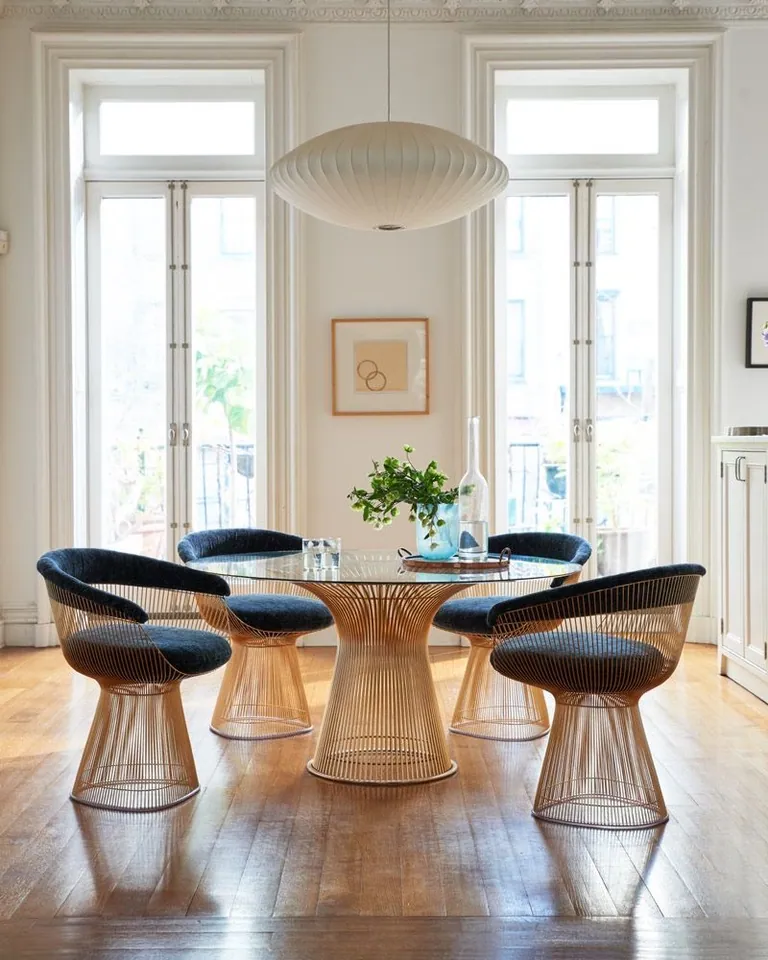
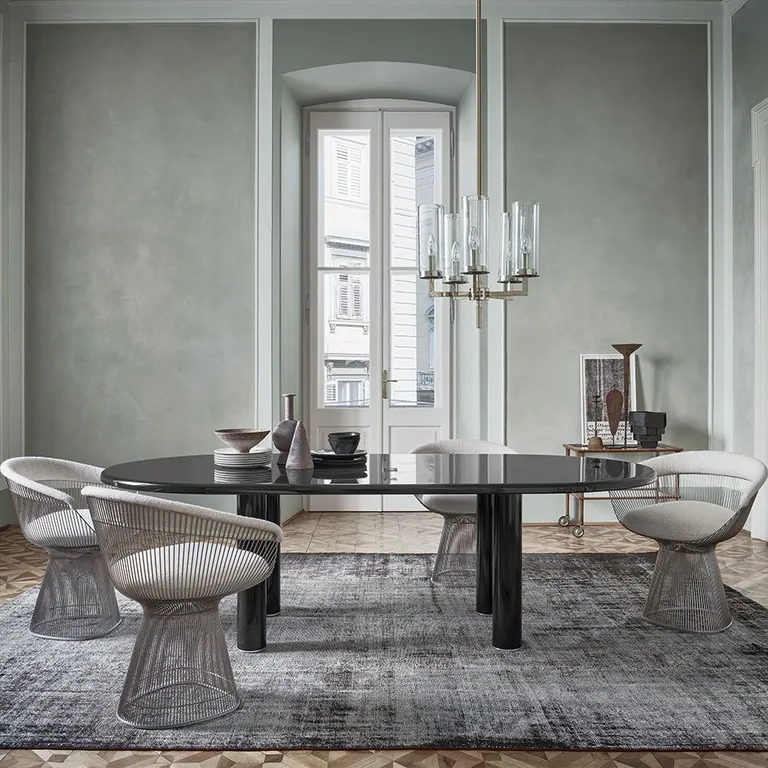
Platner does not live to see it. He dies in 2006 at the age of 86, having worked in his office until shortly before. A classic, he once explained, is something you accept as it is every time you look at it, seeing no way of improving it, and he had never designed anything he would have wanted to change afterwards.

What you should know before you buy
PLATNER FROM US


- 95 × 65 × 77 cm, the lounge chair, seat height 48 cm
- 73 × 55 × 75 cm, the armchair, seat height 49 cm
- Ø 135–180 cm, the dining table in three sizes
Stool (Ø 43.5 cm), Easy Chair with Ottoman, dining table, coffee table (Ø 91.5 or 107 cm) and side table (Ø 40 cm). The tables come with a glass or marble top.
Steel rods, nickel-plated with a clear protective coating, painted bronze metallic or plated in 18-carat gold.
Fibreglass shell, latex foam cushion, upholstery in many fabrics and colours. A plastic ring at the base protects the floor.
Knoll has made the collection without a break since 1966 and offers a five-year warranty.
We are an authorised Knoll dealer and are happy to help with base, upholstery and size. Browse the Knoll collection
Over a thousand welds.
Not one too many.
Sources
Brian Lutz, Knoll: A Modernist Universe (2010); Stuart Lavietes, ‘Warren Platner, Designer, Is Dead at 86’, The New York Times, 20 April 2006; Alexandra Lange, ‘The Opulent Modernism of Platner’, Dwell (2010) and ‘Skating on the Edge of Taste with Warren Platner’, Design Observer (2009); Eric Engstrom, ‘Warren Platner: An Appreciation’, I+S Design (2006); Knoll and Knoll International, product and designer pages, ‘Original Design: Platner Collection’, ‘Introducing Platner Gold’, data sheet Platner Seating Collection (2016).
Pictures
Balthazar Korab (Saarinen office, World Trade Center 1973) and Thomas J. O’Halloran (World Trade Center 1971), Library of Congress, no known restrictions, edited. Fauteuil by Nicolas-Quinibert Foliot and Valentine card: The Metropolitan Museum of Art (CC0). Wheat: OliBac (CC BY 2.0), edited. Windows on the World: Chris Morgan (CC BY-SA 2.0). Ford Foundation: Moucheraud (CC BY-SA 4.0). Product photos: Knoll.