

One leg against the chaos
Eero Saarinen thought that even in the most modern room, the space under the table looked like a slum of legs, so he built chairs and tables that manage with a single foot. And the name everyone knows them by today wasn’t given to them by Saarinen or by Knoll, but by the public.
Bloomfield Hills, Michigan · 1956
A country doctor with tracing paper
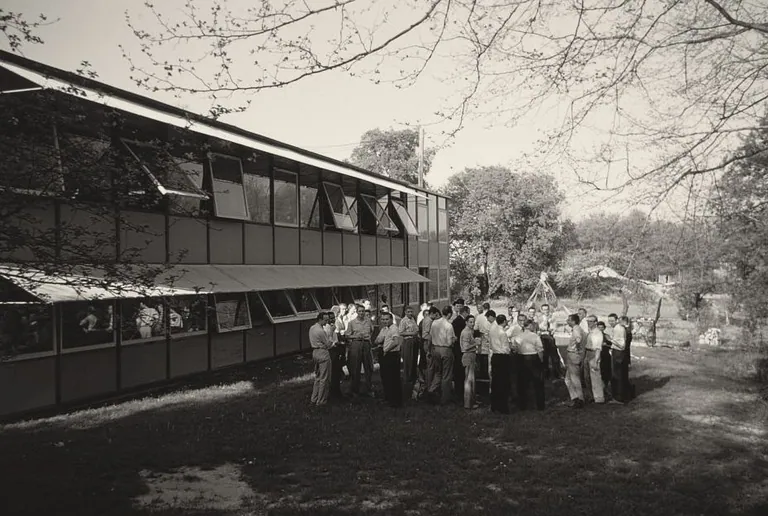
Out beyond Detroit, two minutes from his house along winding country roads, stands a plain office building that Eero Saarinen designed himself. He is in his mid-forties, and a reporter thinks he looks like a country family doctor and dresses as casually as a young college professor.
Looks can be deceptive, though, because Saarinen almost always works until midnight, and sometimes his draughtsmen stay up with him all night. One evening he gets through some 50 metres of tracing paper on his own. When a colleague lends him her desk for the evening, she knows the next morning straight away that he has been there: tracing paper, tobacco, paper, paper, matches, more paper, a cigar stub.

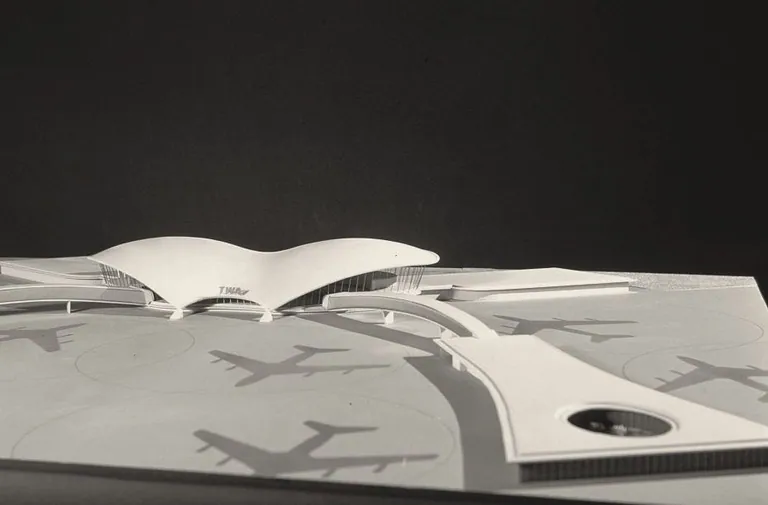
Even at breakfast the work won’t let him go: he draws arches on his grapefruit and takes it to the office as an idea for the new TWA terminal in New York. Anything outside architecture, on the other hand, passes him by, and after one site visit he asks in all seriousness: ‘Just who is Grace Kelly?’
At home he lives with his second wife, Aline, an art editor at the New York Times, in an old brick farmhouse that he has painted white throughout and furnished with his own designs. She writes in the converted garage while he draws, and he sticks little notes on the walls that say ‘I love you’. They name their son Eames, incidentally, after his friend the designer Charles Eames.
Michigan & New York · 1954–1957
The slum of legs
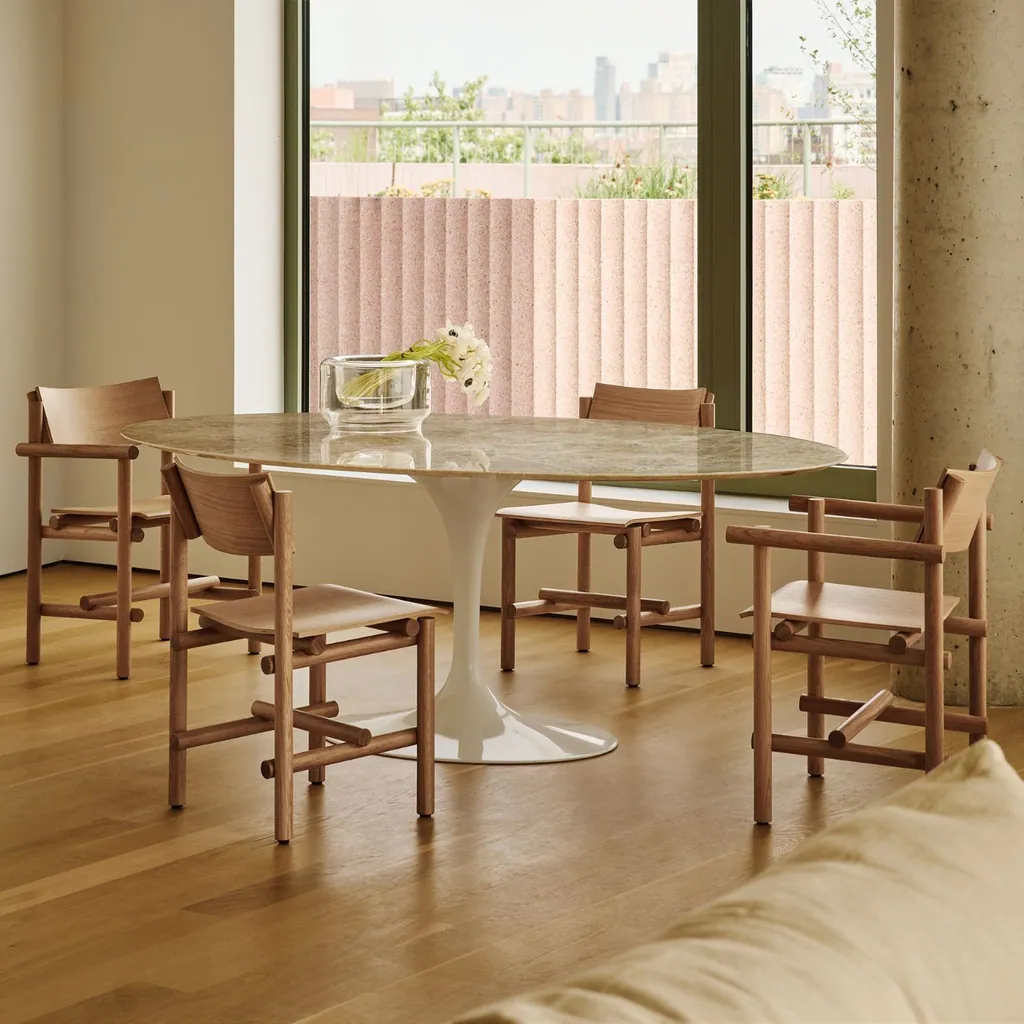
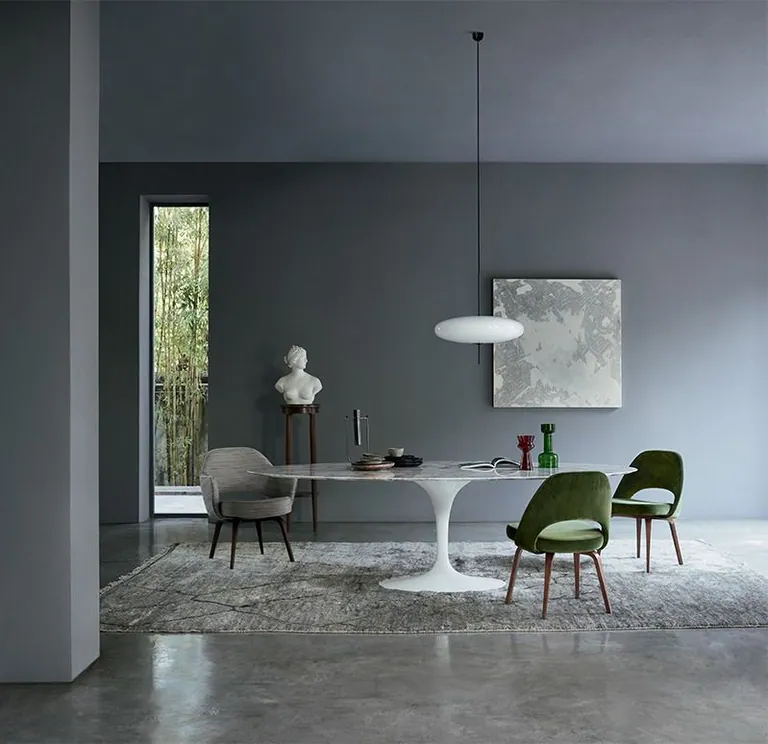
At some point Saarinen notices something he can’t stop seeing afterwards. Up at eye level, modern rooms are nice and tidy, with clean walls and big windows, but under the tables chair legs and table legs stand about in a jumble, legs everywhere. Even the most modern room, he says, is a ‘slum of legs’.
In 1954 he writes to Hans Knoll that he has an idea that will ‘wipe Herman Miller off the map’. Herman Miller is the competition, and that, of all places, is where his friend Eames designs. To Florence Knoll, whom he has known since Cranbrook, he puts it quite simply: there are chairs with four legs, with three and even with two, but none with just one. So that is the one to make.
As always with him, the work begins with hundreds of drawings. Then his office builds small models and sets them up in a model room the size of a doll’s house, because above all the chair has to look good in a room, and only then come full-size models, which Saarinen keeps reshaping with clay. The wide, flat base, by the way, was modelled on a police street sign, as Time magazine reported.

Knoll sends its developer Don Petitt to Michigan, where for almost two years he works on nothing but these chairs, and family and friends have to try them out as ‘guinea pigs’ in the Saarinens’ dining room.
In the autumn of 1955 Saarinen and Petitt are in New York to talk to plastics manufacturers when the news reaches them at their hotel in the middle of the night: Hans Knoll has been killed in a car accident in Cuba. From then on Florence runs the company alone, and with it the project with the single leg.
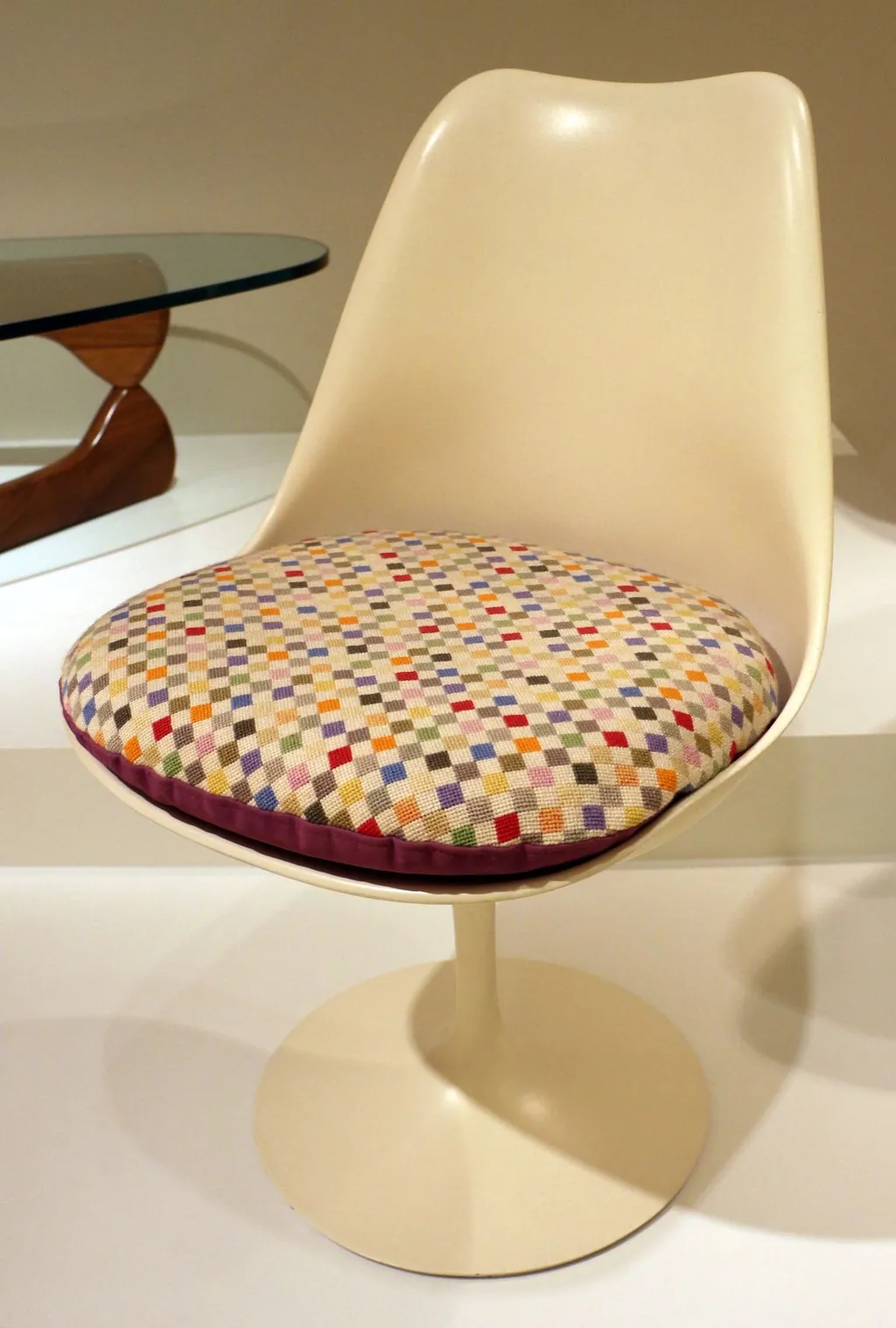
What Saarinen really dreams of is a chair cast in one piece, entirely of plastic, but the technology isn’t there yet. So the shell is moulded from glass-fibre-reinforced plastic and the base is cast in metal. ‘I wanted to make the chair all one thing again,’ he says, and because shell and base are the same colour, it still looks as if it were made in one piece.
Bloomfield Hills & New York · 1957
Florence says yes
Early in 1957 Florence Knoll comes to Saarinen’s house to look at the handmade prototypes. There is a series of photos of the two of them from that year, he in a dark suit with glasses and a pocket square, she in a white blouse and a string of pearls. He bends the shell with both hands, she touches its rim, and finally he lifts the chair high above the table. What you see are two people who have known each other all their lives.
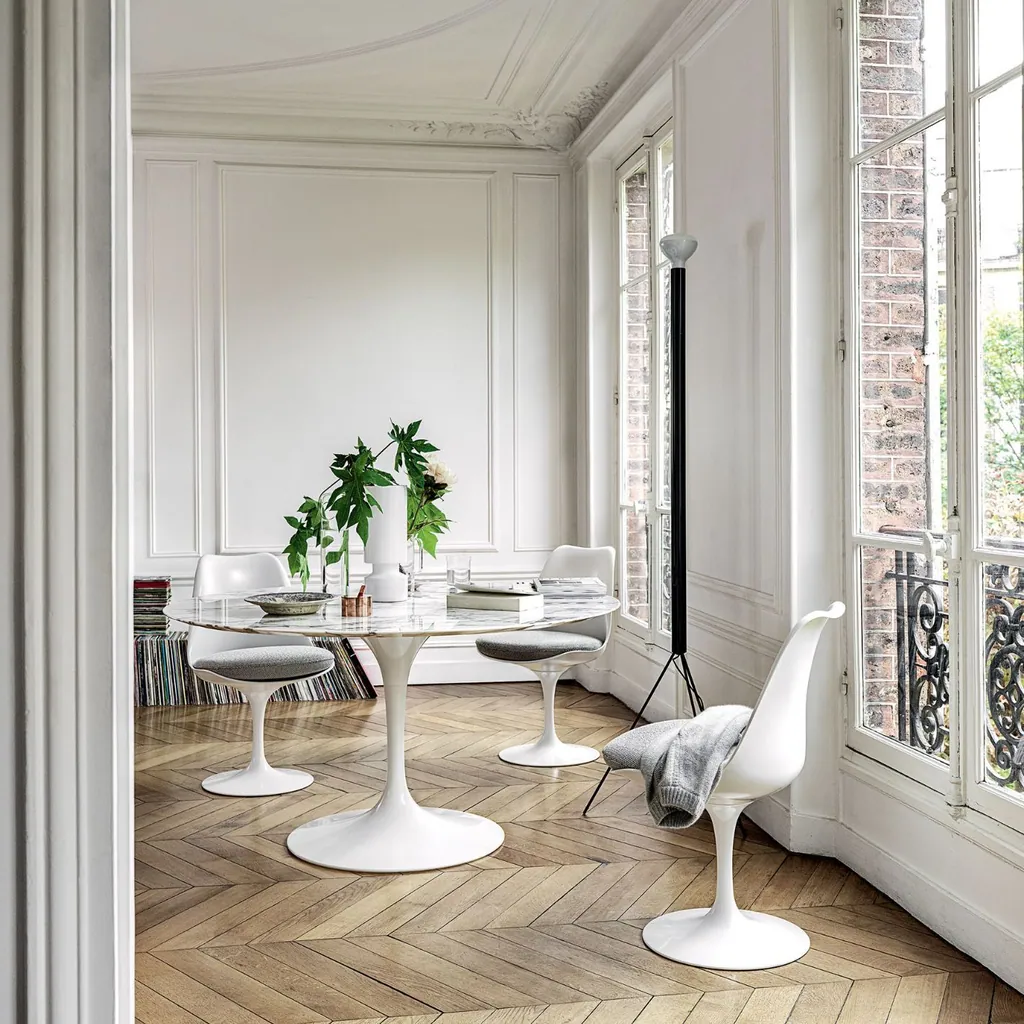
Florence is exacting about it. She wants the swivel chairs to line up neatly at the table again once people have got up, so the Knoll workshop builds her a mechanism that turns the shell back on its own.
In the spring of 1957 Knoll shows the collection in New York, and Time magazine writes about furniture on a stem and calls the seat shells ‘tulip-shaped’. Herman Miller had been working on the same idea, and their design director George Nelson takes it in good sport: he sends Saarinen a photo of their own one-legged chair with a brief note: ‘You won.’
George Nelson, Herman Miller‘Eero’s pedestal was a hell of a lot more elegant than ours.’
New York · 1958 to today
A name nobody invented
In 1958 the collection goes on sale, and Knoll’s graphic designer Herbert Matter takes care of the advertisements. Florence has them printed not only in trade journals but in the New Yorker as well. In one of them a young woman sits cross-legged in a white armchair, her red hair pinned up, wearing a blouse with big black polka dots, arms wrapped around herself, a red seat cushion beneath her. The line in the margin, by contrast, is entirely matter-of-fact: ‘No. 150 Chair’, from the collection of ‘Single Pedestal Chairs and Tables’.
So in Knoll’s advertisements the chair had only a number and no name. It was the public that gave it one, calling it Tulip because of the shell that sits like a flower on its stem. These days Knoll lists it under that name too.
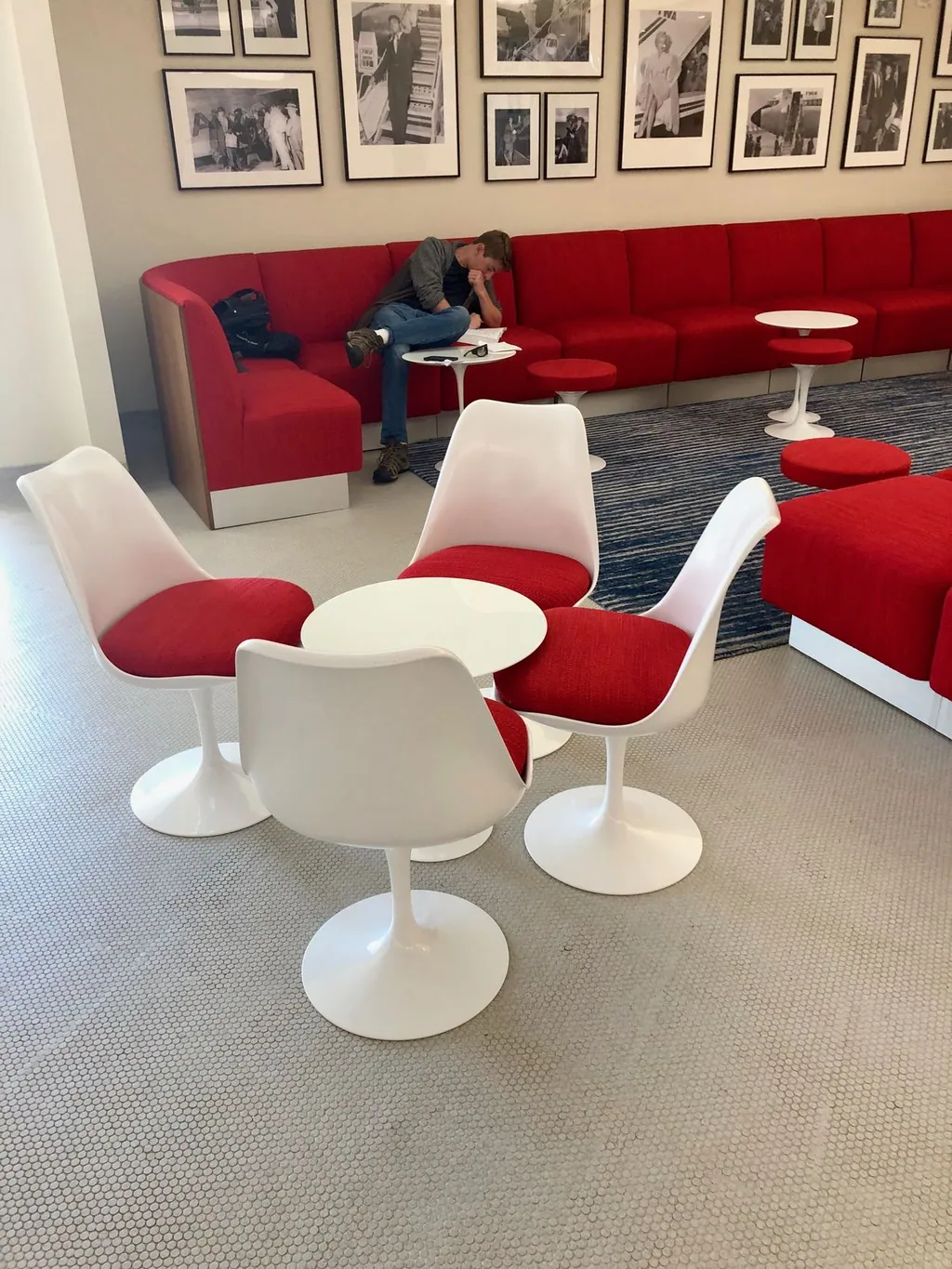
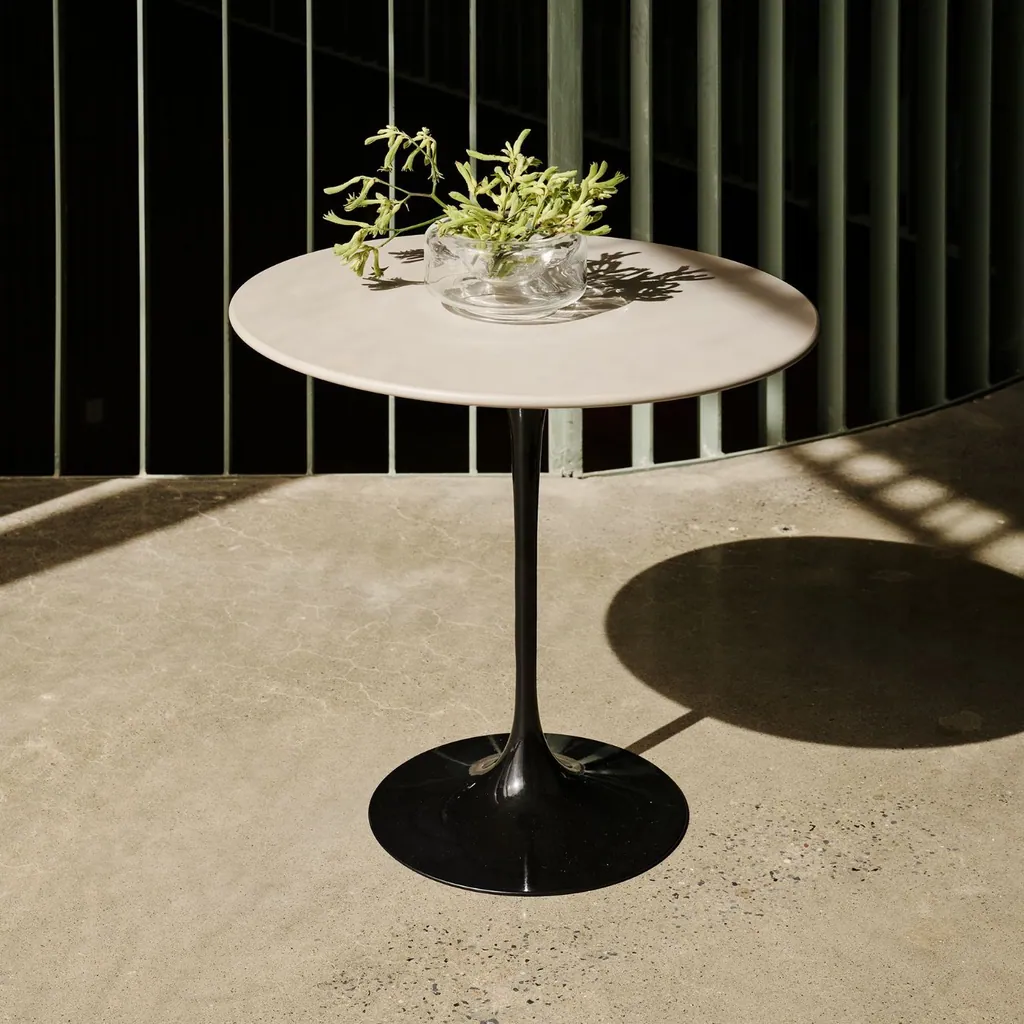
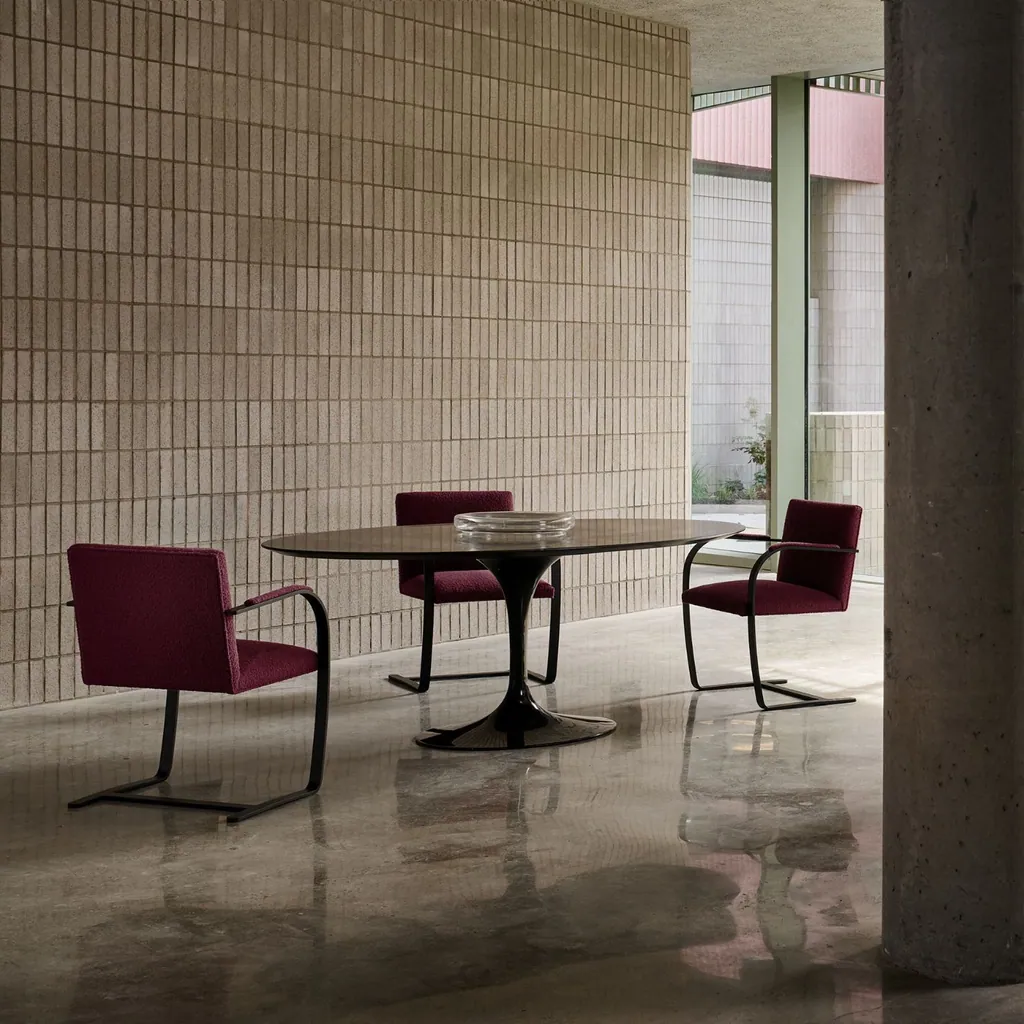
The family still includes chairs with and without arms, a stool and tables, the small ones beside the sofa as well as the tall ones for dining, round or oval, with tops of wood, laminate or marble. Saarinen’s most famous armchair, the Womb Chair of 1948, has a story all of its own, by the way.
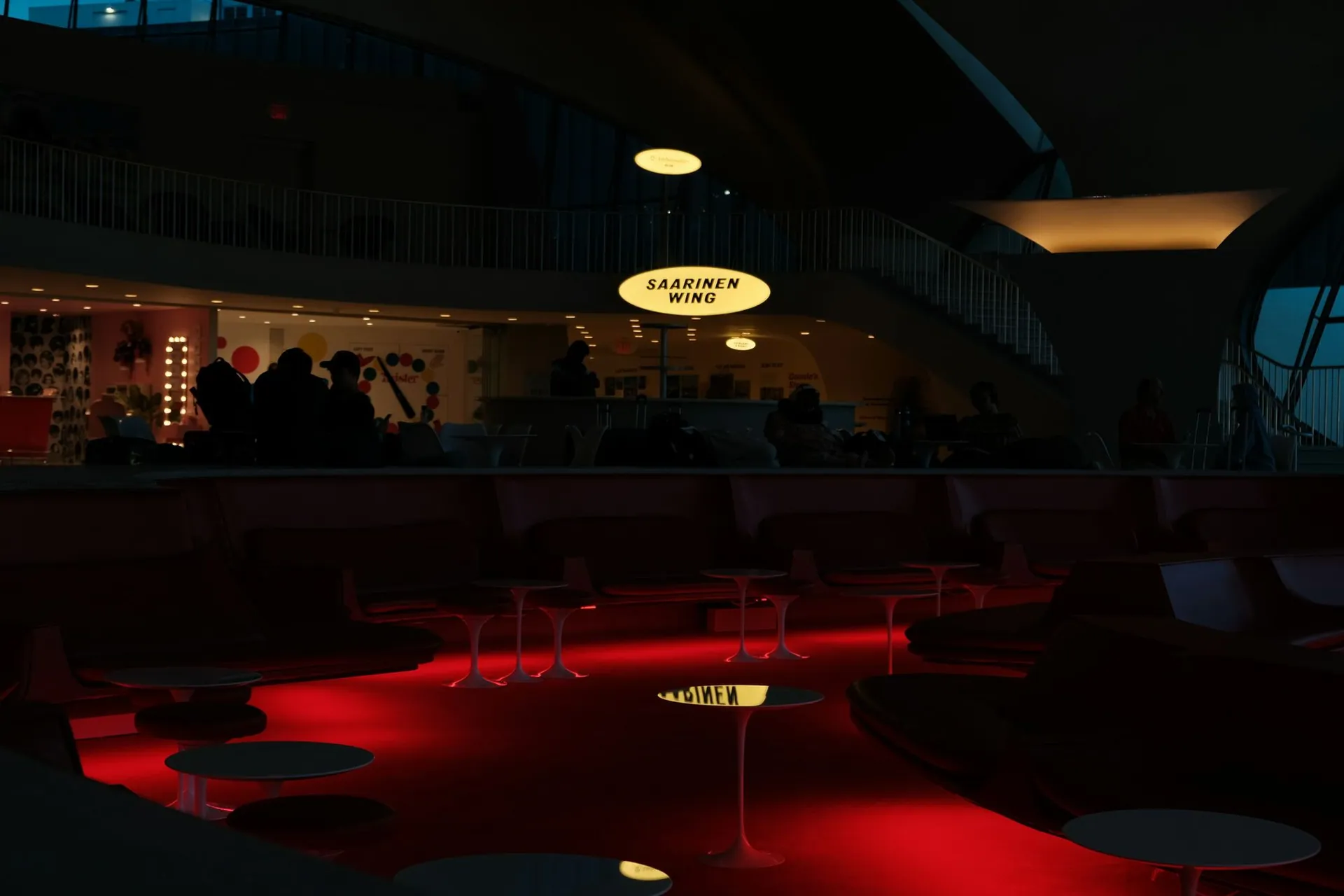
Saarinen doesn’t get to enjoy much of this success. He dies in 1961 at the age of 51, and the TWA terminal, whose arches had once begun on a grapefruit, only opens after his death. Florence Knoll called him the best designer she ever worked with, and her explanation suits a chair that looks as if it were made in one piece: ‘After all, Eero was first a sculptor.’




What you should know before you buy
TULIP FROM US


- 81 cm is the height of the chair and the armchair
- Ø 40 cm is the diameter of the Tulip stool
- 2 cm is the thickness of a marble top
Chairs swivelling or fixed, with a seat cushion or an upholstered inner shell. Shell and base in white or black. Plus side, coffee and lounge tables, round and oval.
Around ten varieties, from the white Arabescato and Statuarietto and the green Verde Alpi to the black Nero Marquina, with a gloss or satin coating. Arabescato and Statuarietto are also available untreated, but untreated stone is open-pored and stains more easily. There are also tops in wood and laminate, and separate outdoor tables with a white acrylic stone top.
Base of cast aluminium, coated with Rilsan, a fused-on nylon layer. Shell of glass-fibre-reinforced plastic.
Knoll puts its logo and Saarinen’s signature on the underside of the base or under the table top, depending on the model. Tulip is the name everyone knows; at Knoll the family was originally called the Pedestal Collection.
Knoll offers a five-year warranty.
We are an authorised Knoll dealer and are happy to help with size, marble and fabric. Browse the Knoll collection
One leg.
And at last there’s peace under the table.
Sources
Brian Lutz, Knoll: A Modernist Universe (2010); TIME, ‘Art: The Maturing Modern’, 2 July 1956, and ‘Art: Dining on a Stem’, 13 May 1957; Knoll, product pages and designer page Eero Saarinen, and ‘Original Design: Saarinen Pedestal Collection’; Cranbrook Art Museum, Pedestal or Tulip Side Chair; Knoll product data.
Pictures
Archive photos: Balthazar Korab / Library of Congress (protection expired according to the Library of Congress). Carol M. Highsmith / Library of Congress (public domain). TWA Hotel: Warren LeMay (CC0). Museum: Sailko (CC BY 3.0). Unsplash: Lumin Osity, Thuy Duong Nguyen, charlesdeluvio, Nick Odnari, Julia Maior, Louise Pilgaard. Product and interior photos: Knoll. Illustrations: Villa Schmidt.